


 MY ACCOUNT
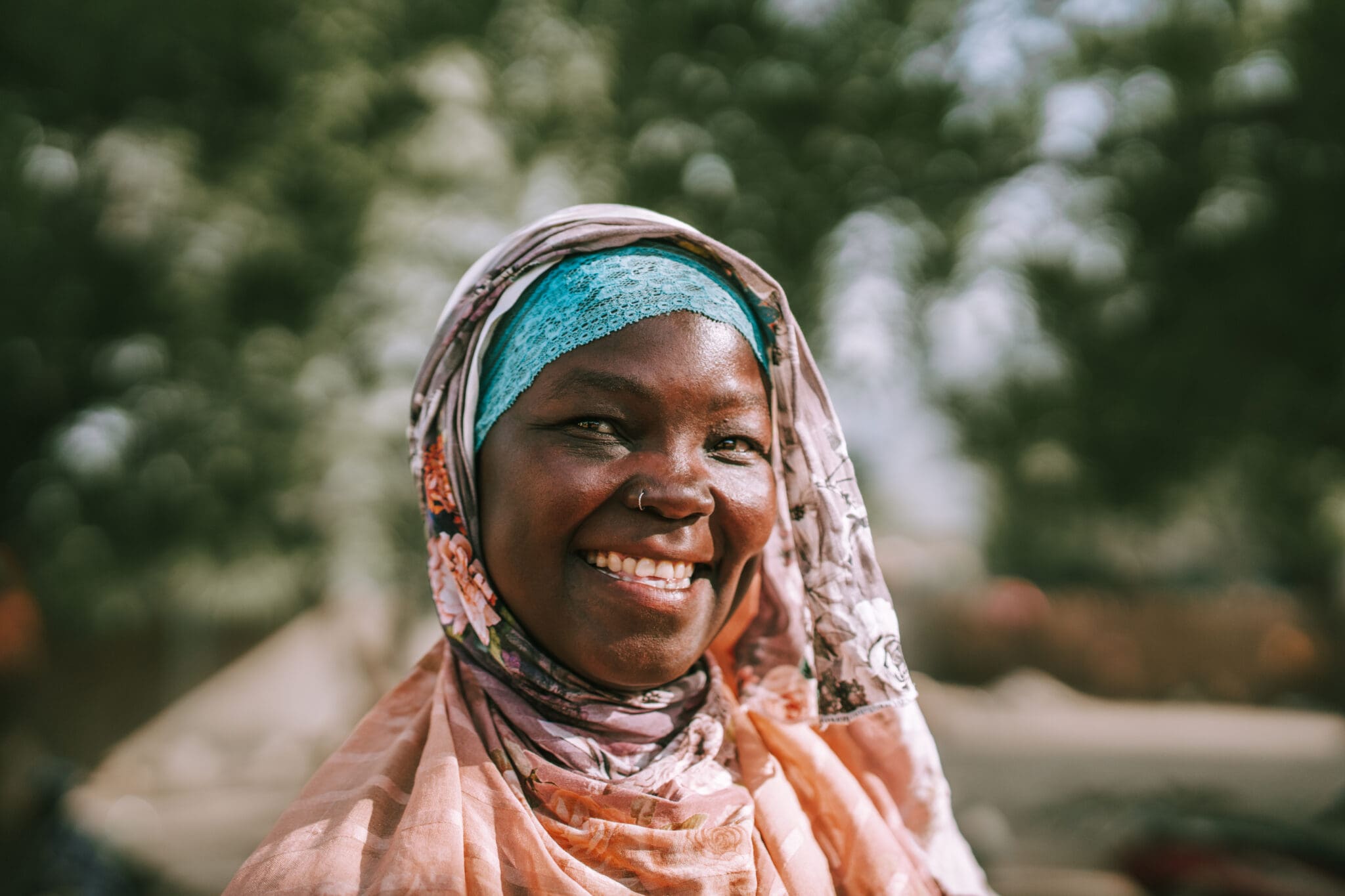
The afternoon sun beats down on the dusty courtyard outside the small church where Miriam, a Christian woman in Chad, sits beneath the sparse shade of an acacia tree.
The sounds of village life drift around us—children’s laughter, the distant bleating of goats, and the rhythmic pounding of grain being prepared for the evening meal. At 28, this Sunday school teacher adjusts her colorful headscarf against the heat, her gentle smile masking a pain that runs deeper than the sweltering temperature—the ache of watching two beloved brothers choose a different path, abandoning the faith that has sustained her through life’s darkest valleys.
Just a few yards behind us stands the church where she teaches children every Sunday, its simple structure a testament to the faith that has anchored this small Christian community in a predominantly Muslim region. The village around us tells the story of religious diversity and tension that defines much of Chad, where choosing to follow Christ can mean choosing isolation from the broader community.
Miriam’s faith in Jesus
“Jesus is everything for me,” she says simply, her voice steady despite the weight of her words. “He’s my savior, He’s my Lord, He’s everything.” It’s a declaration that takes on profound meaning when you understand what it has cost her to make it, spoken here in the very place where her faith was nurtured and where she now nurtures the faith of others.
In Chad, where Christians comprise roughly 40% of the population in a nation where Islam dominates the northern regions, religious identity often determines social acceptance. The pressure to conform can be overwhelming, particularly for families living in predominantly Muslim communities where being Christian marks you as an outsider. For young people especially, the choice between faith and belonging can feel impossible.
According to partners working in the region, the phenomenon of Christians converting to Islam under social pressure has become increasingly common, particularly in areas where Christian families are isolated minorities. The shame associated with being Christian in certain communities creates a powerful incentive to abandon the faith, especially for those who lack strong spiritual foundations or community support.
Audio Bibles make Scripture accessible
Chad’s literacy rate of approximately 22% compounds these challenges. With limited access to Scripture in local languages and few resources for spiritual growth, many young Christians struggle to develop the deep roots necessary to withstand social pressure.
“At the beginning, it wasn’t easy when the first missionary came here. The only way to read the Bible was just in French, but there was not different translation in different languages,” Pastor Job, one of our partners, shares. “But now it is growing. It’s kind of a unique blessing for different people” to hear God’s Word in their own languages through audio Bibles and SD cards.
As a Christian woman in Chad, Miriam’s story begins with blessing—growing up as a pastor’s daughter in a family where faith was central to daily life. “It was a great blessing for me to grow up in a family that is Christian and my father was a pastor,” she recalls. Her childhood was steeped in Scripture, church services, and the rhythms of ministry life.
But that blessing would become a burden when her missionary father moved the family to serve in predominantly Muslim communities. “My father was a missionary, a pastor missionary. Sometimes we used to live far away, and where we lived before, we lived in Muslim communities,” she explains. “Every day when we used to go to church, there were Muslim people who talked about us.”
The daily harassment took its toll on the family, particularly her two younger brothers. “In that community, only two families were Christian,” Miriam remembers. “My two young brothers, they weren’t able to withstand the pressure. That’s the reason my two young brothers became Muslim.”
The pain in her voice is unmistakable as she describes watching her brothers—raised in the same Christian home, taught the same truths—choose Islam over the faith of their childhood. “It is so sad, even to talk about the situation. But every day I am praying that one day God will bring them back home.”
What makes Miriam’s story remarkable is not just her brothers’ departure, but her own decision to stay. Facing the same pressures, the same daily harassment, the same social isolation, she chose differently. “What strengthened my faith was I used to read lots of Bible, and also I used to serve in the church. I am a Sunday school teacher. Every day that I discover the truth in the Bible, it strengthens my faith.”
“The words of God come deeply”
Her commitment to Scripture and service became her anchor when everything else seemed uncertain. Through God’s Word, she discovered that “eternal life is by Jesus, and there is nothing better than following Jesus. That’s why it keeps me strong, and until the end of my day, I will not give up.”
But Miriam’s faith journey hasn’t been without its own struggles. At 28, she remains single with three children by different fathers—choices she openly acknowledges with regret. “I made lots of mistakes in my life. Sometimes it makes me regret the acts that I was involved in. So I ask forgiveness from God and will start a new life by following His faith to know the truth.”
Her vulnerability in sharing these struggles reveals the depth of her transformation and the reality that faith doesn’t exempt anyone from human frailty. Yet it’s precisely in her brokenness that God’s grace shines brightest.
The family’s challenges extend beyond her brothers’ conversion. Her pastor father divorced her mother and remarried, creating additional fractures in what was once a stable Christian home. “My father was a pastor, but he got divorced with my mom. And my father got a second wife. That’s really a big challenge in my family,” she shares, her voice heavy with the weight of disappointment.
The remarriage has created distance between Miriam and her father, leaving her afraid to even speak with him. “I’m afraid to even talk to my father. That’s a hard situation—it’s not good.” Yet even in this pain, her heart remains focused on restoration rather than resentment.
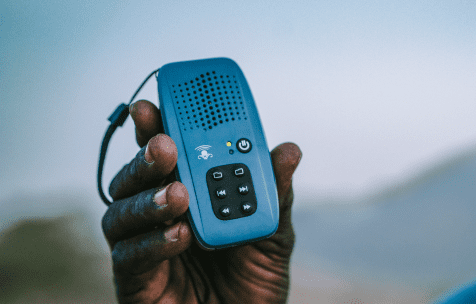
When offered an audio Bible during a recent distribution event, Miriam’s response revealed both her personal hunger for God’s Word and her heart for evangelism. In addition, she saw it as a tool for reaching others, including her Muslim brothers.
Pastor Job describes the transformative power of hearing Scripture in one’s heart language: “As a preacher, it is kind of a big joy when you preach in the language that the people understand. You can automatically see joy, happiness in the heart, and even the words of God come deeply because it is easier to understand in their own languages.”
A tool for evangelism
“Of course I can use it and share the word of God with other people, but not only audio, but even SD cards. I will share them with my neighbors and with other people too,” Miriam explains. Her plan to give SD cards to her brothers, hoping they might hear the gospel in a format accessible to them, demonstrates the persistent hope that characterizes her faith.
We, at Global Christian Relief, work with local partners to provide physical Bibles, audio Bibles, SD cards, and other resources to believers like Miriam who face enormous pressure to abandon their faith. For just $5, we can provide a Bible that allows a persecuted Christian to hear God’s Word in their own language, strengthening their faith and equipping them to share the gospel with others.
During recent distribution events in Chad, the demand for audio Bibles far exceeded supply. “People need more and more audio because it is helpful,” Miriam explains. “Some of them can read, but by listening, they discover the truth of God. Some of them, even though they are Christians, that way they can strengthen their faith.”
For believers in communities where being Christian brings shame and isolation, these resources provide both spiritual nourishment and evangelistic tools. They represent hope—hope that families divided by religious differences might be reunited, hope that the gospel can penetrate even the most resistant hearts.
Miriam’s specific prayer requests reveal the depth of her faith and the breadth of her concerns. “First of all, you can pray for God to strengthen my faith, but to get back my two young brothers who are right now Muslim. This is my hope.” She also asks for prayer for family restoration and healing from the wounds created by her father’s divorce and remarriage.
Her story embodies the reality faced by millions of Christians worldwide who must choose between faith and family, between truth and acceptance. In her refusal to compromise, in her persistent hope for her brothers’ return, and in her commitment to sharing the gospel despite personal cost, Miriam represents the unshakeable foundation of the global church.
“Through the words of God I discovered that eternal life is by Jesus,” she reflects. “There is nothing better than following Jesus.” It’s a conviction forged in the furnace of family division, tested by social pressure, and refined by personal failure—yet it remains unbroken.
In a world where faith often comes at great cost, Miriam’s story reminds us that some treasures are worth any sacrifice, and some truths are worth defending even when you stand alone.
Your support helps provide audio Bibles to believers like Miriam across Chad and around the world, allowing God’s Word to reach people in their own languages and transform their daily lives. Become a Frontline Partner today and your monthly, recurring gift can provide emergency relief and long-term support—plus Bibles, safe shelter, trauma counseling, medical aid, food and more for those in dire need.
