


 MY ACCOUNT
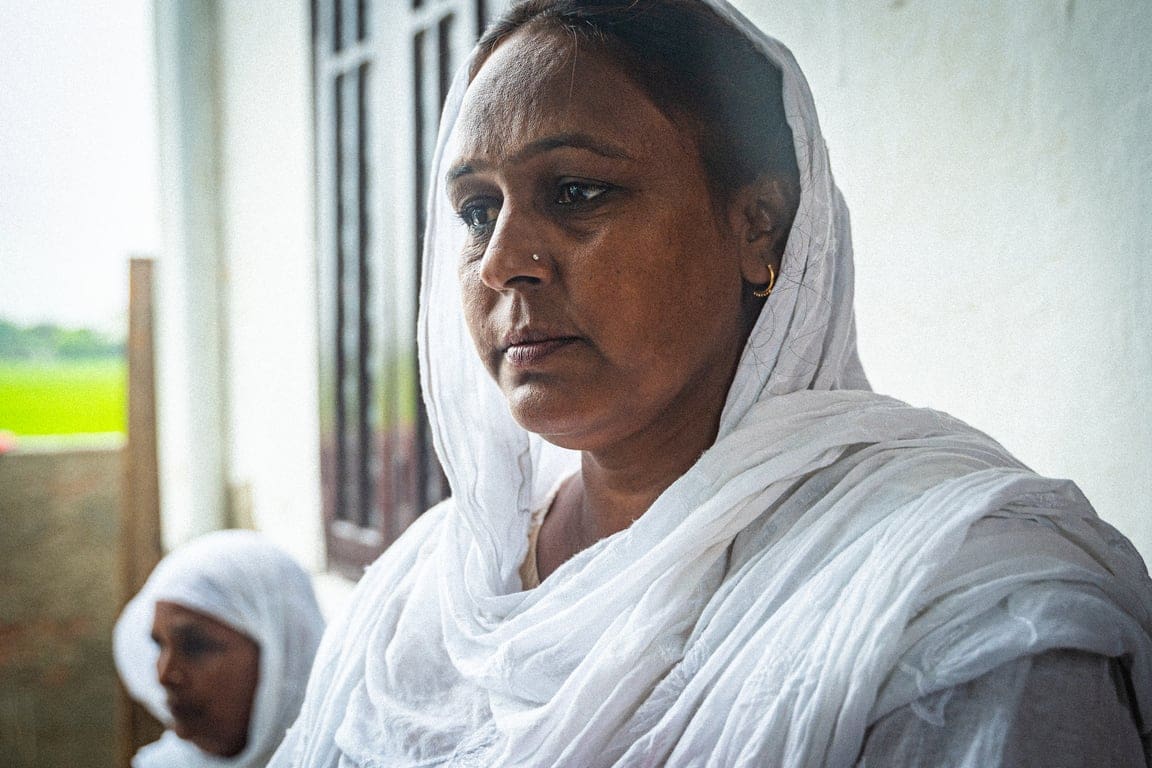
A light rain falls as we navigate the narrow, flooded streets of rural Punjab. After a seven-hour drive, we arrive at a small compound housing a church and a newly constructed roadside shop. I’m here to meet Simran, a Christian widow in India whose story of faith, loss, and resilience has drawn us from halfway across the world.
As we enter the compound, the weight of grief hangs heavy in the air; Rajiv, Simran’s husband, was killed by Sikh extremists earlier this year. Simran emerges to meet us, dressed in a traditional Punjabi outfit with a white head covering. Despite the profound loss etched in her eyes, she has a quiet determination as she greets us.
Across the street, a prominent Sikh gurdwara starkly contrasts the modest church compound. Punjab, the spiritual heartland of Sikhism, is home to a Sikh majority whose turbans and beards are typical in streets and fields. This juxtaposition of the small Christian church and the grand Sikh temple underscores the complex religious landscape of the region, where minority Christians often exist alongside the dominant Sikh culture.
The church interior is simple. A gray pulpit with a red cross stands at the front, while chairs are stacked in one corner, ready to be arranged for worship services. Large mats are stacked in another corner for prayer meetings. A photo of Simran’s late husband, Rajiv, hangs in the front, a constant reminder of his sacrifice. It’s in this setting, with the steady drumming of rain on the roof, that Simran begins to share her story.
From Sikh roots to Christian faith
Simran shares that she was born into a Sikh family of farmers. It was her sister who first came to know Jesus and invited Simran to church. “I accepted the Lord Jesus Christ on my own. Since then, I’ve been following Him,” Simran shares. Early on, her parents opposed her new faith, but she remained resilient—praying, fasting and reading her Bible whenever she could. Next, Simran started praying for God to provide her with a husband who also followed the Lord; someone she could minister alongside with a passion.
Her prayers were answered when she met Rajiv, a pastor dedicated to serving the Lord through evangelism and discipleship. Their marriage in December 2009 was a joyous celebration. “I felt very happy,” Simran remembers, a fleeting smile crossing her face, “because I had a Christian wedding and I know it honored God.”
However, the couple’s ministry faced challenges from the beginning. They encountered opposition and harassment from the community, but nothing prepared them for the violence that was to come. “I never thought that the people in the community would persecute us in this way,” Simran says, her voice tinged with disbelief.
A tragic attack
On January 22, 2024, Simran’s husband received a call inviting him to a church dedication in Jalandhar. Despite financial struggles, he managed to gather enough money for the trip. Simran says Rajiv was eager to encourage the church members there.
The details of that fateful day are etched painfully in Simran’s memory. She spoke with Rajiv on his way there and everything was fine. They talked about their boys and the church—there was a family who needed prayer for an upcoming court case, she remembers. “Rajiv was certain the outcome would be positive and God would be with them,” Simran shares.
But after the church dedication, Rajiv was warming his hands by the fire with other believers from the community when the unthinkable happened. A mob of about 35 men, armed with Sikh swords, launched an attack on the Christians at the dedication.
Simran learned of the attack the next day through cryptic phone calls. At first, she was told her husband was injured but alive. Hope turned to despair as the true extent of his injuries became apparent. “The doctor said there is no chance of his survival,” Simran recalls, tears welling in her eyes. “His skull bone had broken and pierced his brain.”
Simran finds forgiveness and determination
The loss has been devastating for the entire family. Simran’s tears stream down her cheeks as she shares. We pause and sit together in her grief. We spend time with her three young boys and it’s hard to imagine their loss. When the youngest, Solomon, hears his mom cry, he is quick to tell her not to worry, that he will grow up and take the place of his father—continuing his work and ministry.
Rajiv’s mother joins us later. She’s inconsolable in her tears. One of our team members sits with her and they embrace, the type of embrace that grips tight and lasts for minutes with no words. The room is quiet and only the muffled sounds of her buried cries are heard.
Looking outside the church doors from where we sit, you can see the Sikh temple. It’s with this reminder, I tentatively ask Simran about forgiveness. Her response is both surprising and profound: “I have already forgiven my husband’s killers,” she says. “It was very difficult. But because of the Lord, I was able to reach that point where I could forgive. I know that I am not the judge of anyone. I can only place these things in the hands of the Lord.”
Initially, Simran said that she felt like the Lord had abandoned her. But it was the love and care of the Body of Christ that made all the difference. “So many people came and they encouraged me. And many believers helped me meet the needs of my family. You also came and you helped me in this way. You stood with me.”
Simran is determined to continue the ministry she started with her husband. She now leads the church, continuing to serve the community and spread the message of Christ. Her prayer is that her sons will follow in their father’s footsteps. “I dream that my children study well in school,” she says, a hint of hope in her voice. “And that they become good servants for God.”
Hope for the future as a Christian widow in India
Simran’s story is far from over. Through our partners, GCR helped build a small shop at the front of the church property to support Simran and her three young boys. During our visit, we participated in a ribbon-cutting ceremony to officially open the store, dedicating it in prayer. Stocked with groceries, household items, and other essentials, this shop represents hope for financial stability after the family lost its primary breadwinner.
As our time with Simran ends, we gather to pray. The emotions are raw and powerful. The grief still pours out, a tangible reminder of the profound loss this family has endured. Yet, even in this moment of sorrow, there’s an underlying current of strength—a reflection of beauty in Simran’s faith.
Before we leave, we step into the shop one more time. It’s opened now, and Simran begins to sell a few things to children walking by–a bag of chips, some candy and gum. There’s a large glass jar with cardamom and another with anise seeds on the counter. These items might not seem like a future, but for Simran and her three boys, this is now their livelihood.
On our way out, she has one more request: “Whatever happens, pray that we will not abandon the faith. That we will not abandon God.”
She waves goodbye as we head to our car on the muddy street. The rain has cleared up slightly, but it looks to return at any moment.
For a video overview of the situation facing persecuted Christians in India, visit our YouTube channel.
*Please note: names have been changed to ensure safety, security and anonymity.
Send emergency aid to Christians in India and beyond
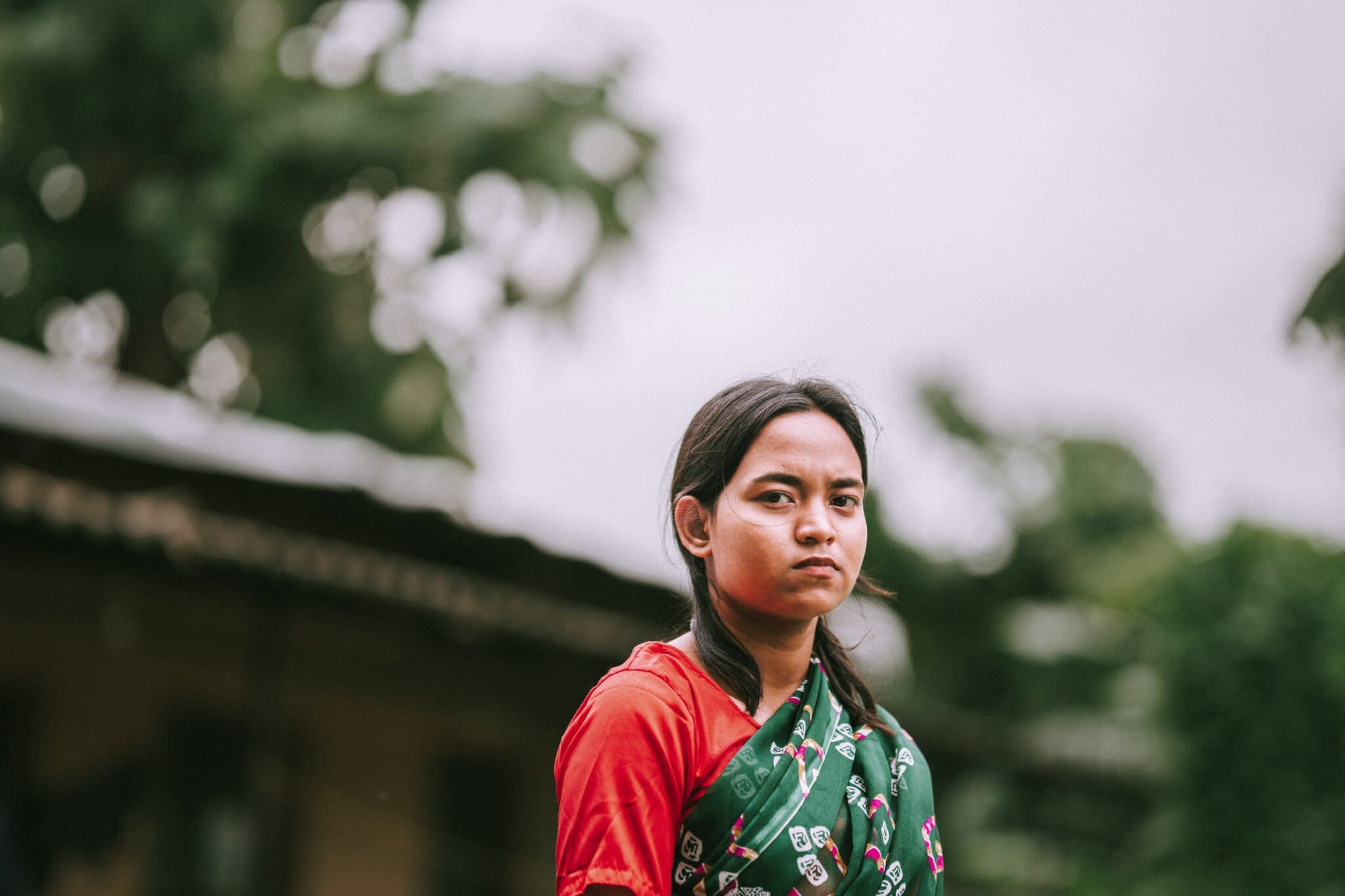
Indian believers are under attack because of their faith. Your compassionate gift to Global Christian Relief can strengthen and sustain Christians in India, just like Simran. Meet the needs of displaced believers in Christ now, supplying them with critical essentials like food, clean water, shelter, mattresses, hygiene products, persecution training and more. Please give today.
