


 MY ACCOUNT
I’ve visited nearly 70 countries, and I’ve learned to approach complicated situations both informed and prepared, with a cautious curiosity. That’s exactly how I arrived in Plateau State, or so I thought.
From afar, Nigeria feels impossible to understand – sensational headlines on one side, well-written but poorly informed narratives on the other, and layers of propaganda and counter-propaganda that make it hard to know what’s true.
So, when I arrived in the country’s Middle Belt last November, I tried not to come with conclusions. I didn’t want to assume too much about the motives behind the violence here.
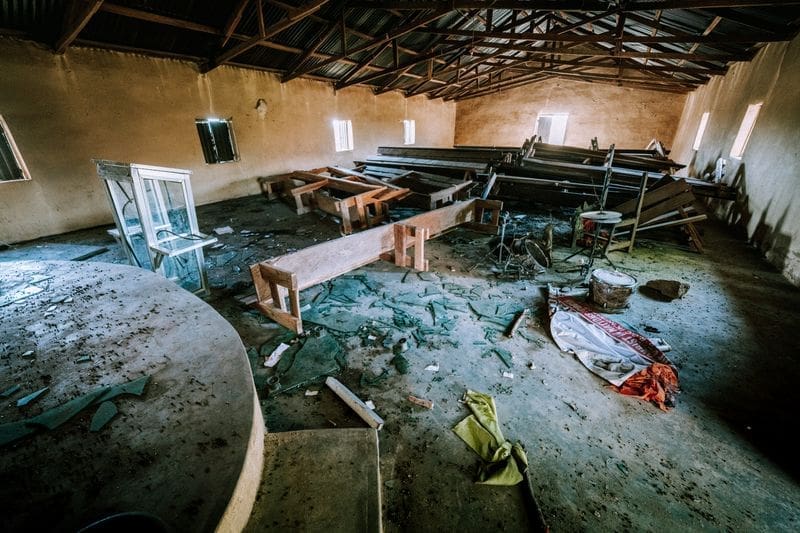
But after several days on the ground – speaking with pastors, widows, elders, and community leaders in villages that had been burned, occupied, or emptied out – the pattern became painfully clear. In community after community, the first buildings destroyed appeared to be the pastors’ homes, then the churches, and finally the homes of their congregants.
Plateau State sits in Nigeria’s Middle Belt, where the largely Muslim north meets the predominantly Christian south. For generations, Christian farmers and nomadic Fulani herders have shared the land, with Fulani cattle routes often crossing Christian farmland.
From what I was told, this relationship used to be fairly peaceful, with herders asking permission or even paying farmers to use their land for grazing. While this geographical overlap is increasing as herders are forced further south by climate change in the North, the resultant increase in tension did not appear to be enough to start a conflict.
However, because of this tension and the narrative line propagated by the government, many observers are still describing the violence here purely as a farmer-herder conflict over land and resources.
But the stories survivors tell followed a pattern that suggested this was not the whole story: if this was simply over grazing land, why would pastors and their churches be attacked first, then entire Christian communities driven from their homes?
The Night Everything Changed
By the time I was standing beside a pastor’s widow in the ruins of her home, I wasn’t wrestling with abstract debates anymore.
She met us outside what used to be her home. Her name is Tarfusa – the wife of the late Pastor Gideon – and she walked us slowly through the remains: a few charred stones, the bent frame of a motorcycle, and the blackened ground where her kitchen once stood.
She spoke plainly, almost quietly, as if strength was something she had learned to ration.
On the night the attackers came, she had been cooking. Word spread through the village that armed men were approaching, so she and her husband crossed the stream in the dark to hide. They stayed there for hours. But sometime around four in the morning, while it was still pitch black, her husband made a decision.
He went back.
For Pastor Gideon, it was the unavoidable decision of a Jesus-formed shepherd. A pastor would rather face danger with his people than run to safety alone. The sentiment he had conveyed to his wife was this: If he ran away and saved his own life, he might return with none of his community surviving to hear his preaching. He would rather die with them. This stuck with me more than anything else she said.
Pastor Gideon was killed that night, along with several others. His house was destroyed first – just as many Christian communities told us happens in nearly every attack. The church was damaged too, though not as completely as his home. What remained of his motorcycle lay twisted beside the rubble.
As Tarfusa pointed out the places where the attackers forced their way in, where the fire started, and where her husband’s body was later found on the pathway outside, I felt the last of my distance fall away. This wasn’t an abstract story about conflict in a faraway country. This was a widow standing in the ashes of a home targeted because her husband was a Christian pastor.
The Same Story, Told in Different Villages
Leaving Suwa that afternoon, I might have told myself this was a singular tragedy – a heartbreaking loss contained within one village. But they fit a pattern I had seen throughout my trip.
In Mangu, a friendly young pastor of a similar age to myself showed us the shell of his church – burned again and again in a single day – explaining how his congregation now worships in the open with armed guards watching the tree line. Farther down the road in Jipun, an elder walked us through the rubble of his church, burned in 2023, before telling us that much of their farmland is now occupied by Fulani herders, leaving families unable to return home. And in another village, the pastor’s home was the first structure attacked – his secretary killed trying to defend the church – while eleven others were murdered that night.
In yet another village, I was told that the attackers who had burnt and then repeatedly defecated in their ruined church were not even herders, they were radicalized locals who had lived alongside the Christians in their village for many years. How could that be reconciled with a conflict purely over grazing land?
Many of the pastors belonged to the same church network across Plateau State. Some likely knew one another. But the attacks happened miles apart, in different villages, on different nights. And yet the shape of the suffering was nearly identical.
When the Pattern Became Impossible to Ignore
It wasn’t one story that changed my mind. It was the repetition – the same sequence of loss unfolding in places miles apart, a pattern of change in sentiment and behavior toward people with no connection except their faith.
Somewhere along the road between these villages, hearing the same pattern again and again, I finally admitted what the evidence was already showing me.
In my voice memo that day, I put it plainly:
“It’s very hard … to not sit there and believe that there is a genuine systematic targeting of Christians for their faith. It’s so religiously motivated.”
I felt a sobering clarity that came from walking alongside communities who have already lost more than anyone should be asked to endure.
From the conversations I had across these villages, an even clearer picture emerged. Extremists appear to have exploited the existing tensions between farmers and herders, radicalizing men, igniting violence, and pushing it toward something far more religious in focus than the Nigerian government would have the world believe.
What might once have been a local dispute has been transformed into a one-sided campaign that is steadily emptying Christian communities across the region.
What Comes Next
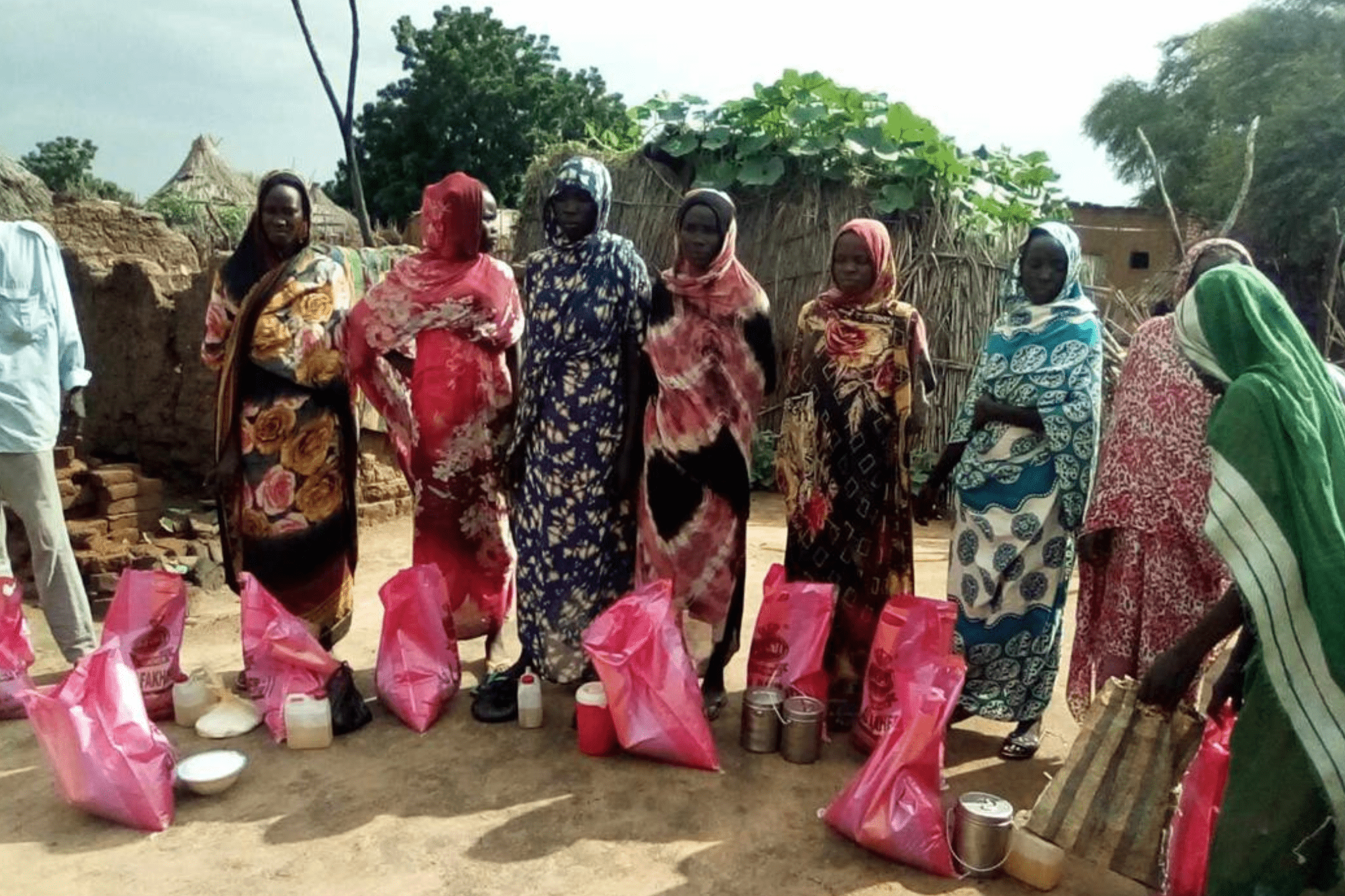
I left Plateau with far more stories than I could possibly tell from a single visit – far more than one person can absorb or honor in one trip. Stories of pastors who refuse to leave their people. Stories of congregations worshiping roofless in the burning sub-Saharan sun. Stories of children who no longer sleep through the night because gunfire has become their lullaby. And stories of believers who have lost more than most of us could even imagine.
This trip didn’t give me all the answers, but it did give me clarity I didn’t have before. The violence here isn’t distant or theoretical to me any longer. It is directed, repeated, and devastating – and it is falling overwhelmingly on Christians who are simply trying to live out their faith in the place they call home.
My first hope is that as you read these stories, you’ll hold these communities in your prayers and in your heart. They are part of our family in Christ. And they need us – not just to glance their direction for a moment, but to stay with them, to intercede for them, and to let their courage shape our own faith. These attacks aren’t just one-offs, they are happening every week, right now – they need constant prayer from around the world.
My second hope is that you will also hold their persecutors in your prayers. A poor nomadic people whose vulnerabilities have been taken advantage of and turned into hatred and violence toward the people they used to call neighbors. Pray for peace in their hearts – and that they might find Jesus in the peaceful response they find to the conflict they fight.
Finally, I’d ask you to pray that the hearts of government officials would be turned, to acknowledge the religious nature of the conflict in the Middle Belt and work with the international community to find a solution.
This is only the beginning of what we saw. And it’s only the beginning of what needs to be told.
Stand With Nigerian Believers Send Relief to Persecuted Believers in Nigeria
Attacks in Nigeria have displaced families and destroyed churches that anchor Christian communities. Your gift helps provide emergency relief and rebuild homes and churches so believers can recover and stand strong in faith.
