


 MY ACCOUNT
A Church Torn Open
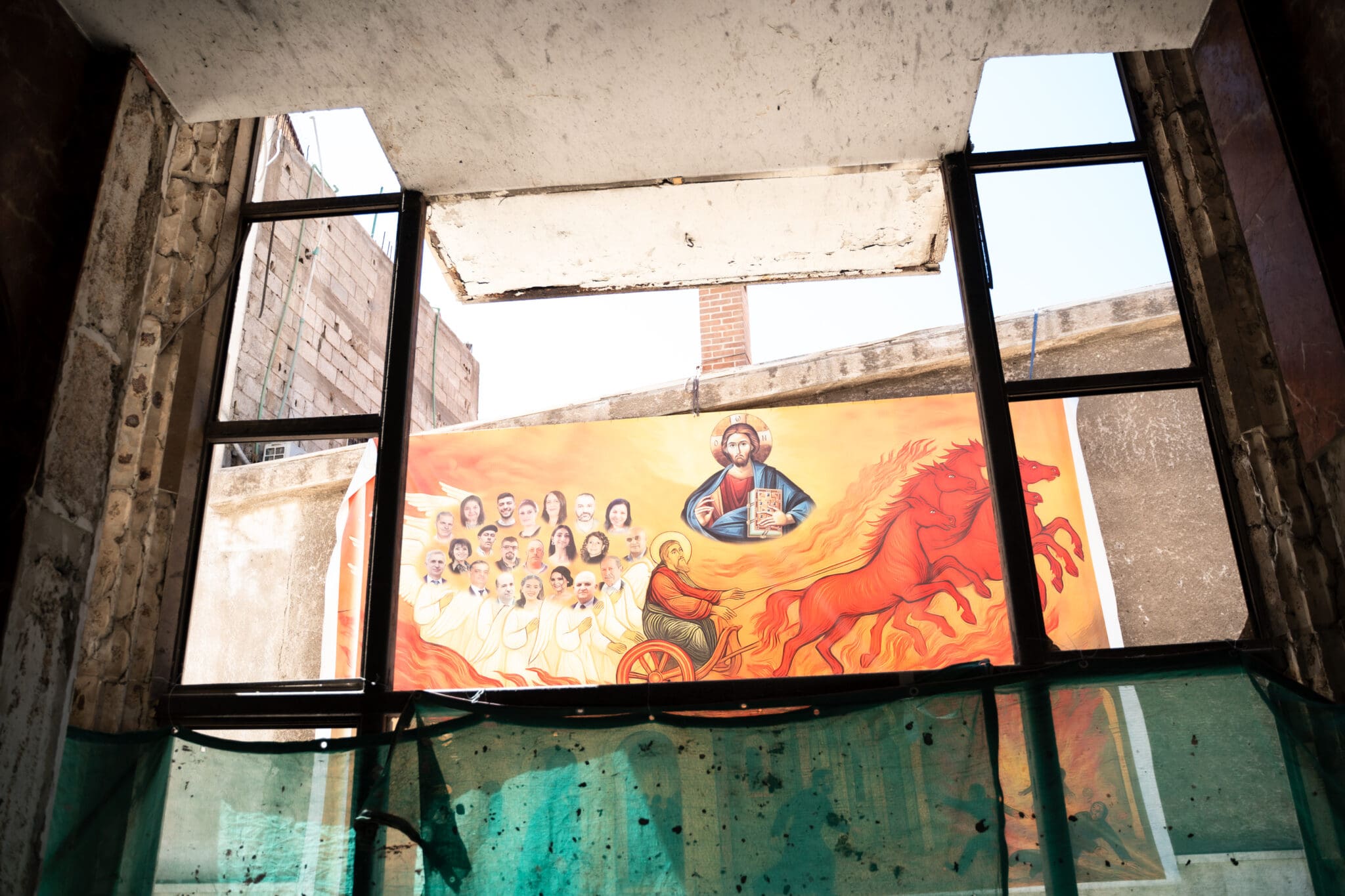
On the edge of Damascus, in the working-class neighborhood of Al-Douala, Mar Elias Church bears scars no plaster or paint can conceal. Its back wall is torn open, draped in green mesh; plywood covers the blast crater on the floor. And on that makeshift altar of ruin, someone has placed a single candle.
That light—flickering against the smell of dust and incense—was the first sign the church was still alive.
On June 22, 2025, a man armed with a rifle, knives, and a suicide vest entered Mar Elias during evening prayers. The massacre lasted less than a minute.
Father Boutrous, the parish priest, remembers the detonation with searing clarity. When the blast ripped through the sanctuary, he was thrown beneath rubble. In that moment of darkness, crushed by debris, he believed his life was over.
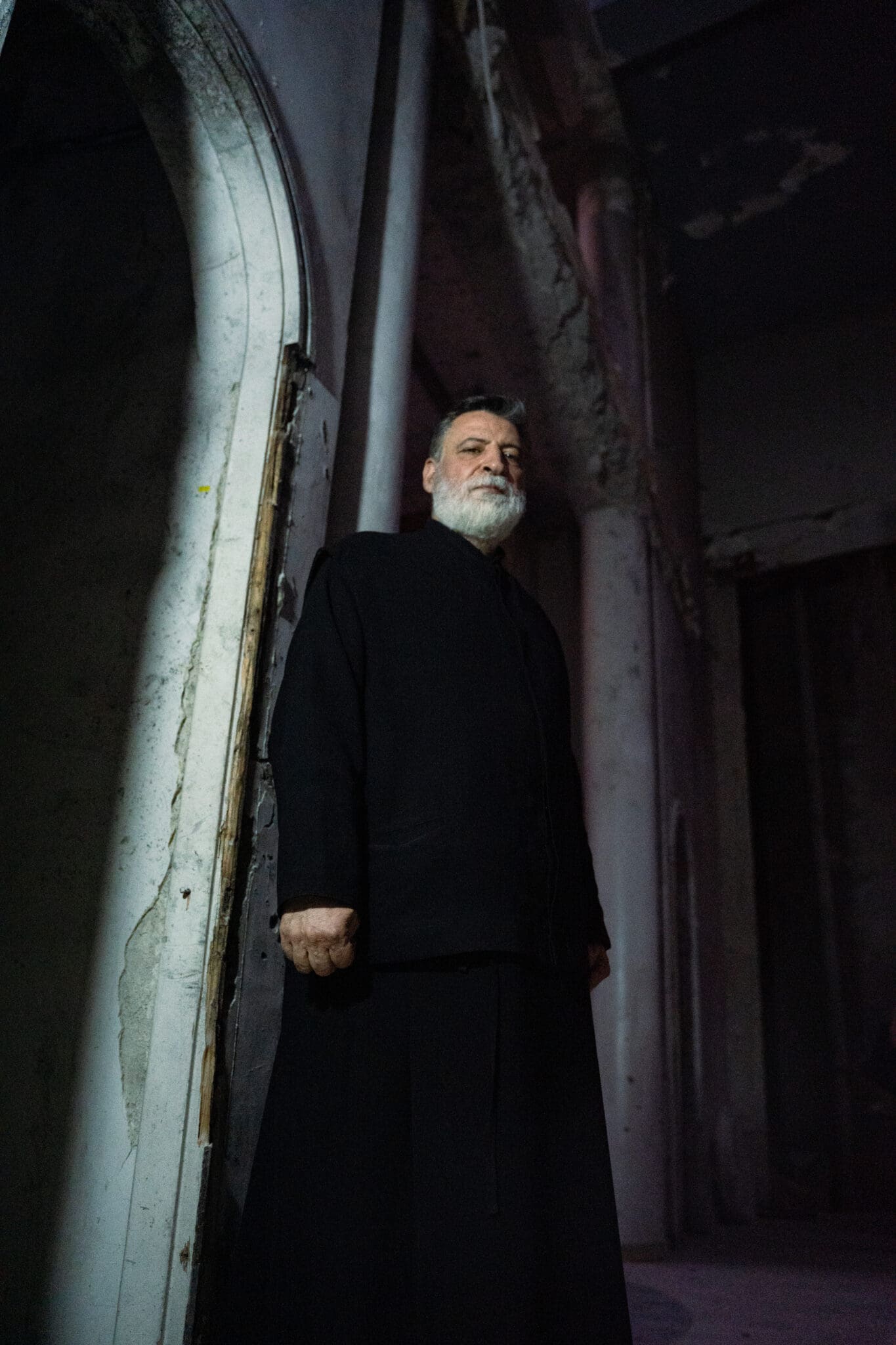
“I thought I was dead,” he told me. “I felt peace, as if I were entering heaven. Then I realized I was still breathing. I pushed the debris away and stood up. The sight before me was otherworldly—smoke, carnage, silence. It felt like another realm.”
That illusion broke as cries reached his ears. His people—children, parents, elderly parishioners—were maimed and bleeding around him. He gathered himself and began moving through the sanctuary, helping the wounded, blessing the dying.
For days afterward, the blood on the church walls remained. Boutrous refused to let the walls be scrubbed clean, lingering in the ruined nave alone, breathing the iron scent that others tried to mask with bleach and air freshener.
“I smelled it like perfume,” he said. “Because it was the blood of saints—the same ones we used to read about in books, except now they were in front of me, and I buried them with my own hands.”
 \
\
A Survivor’s Questions
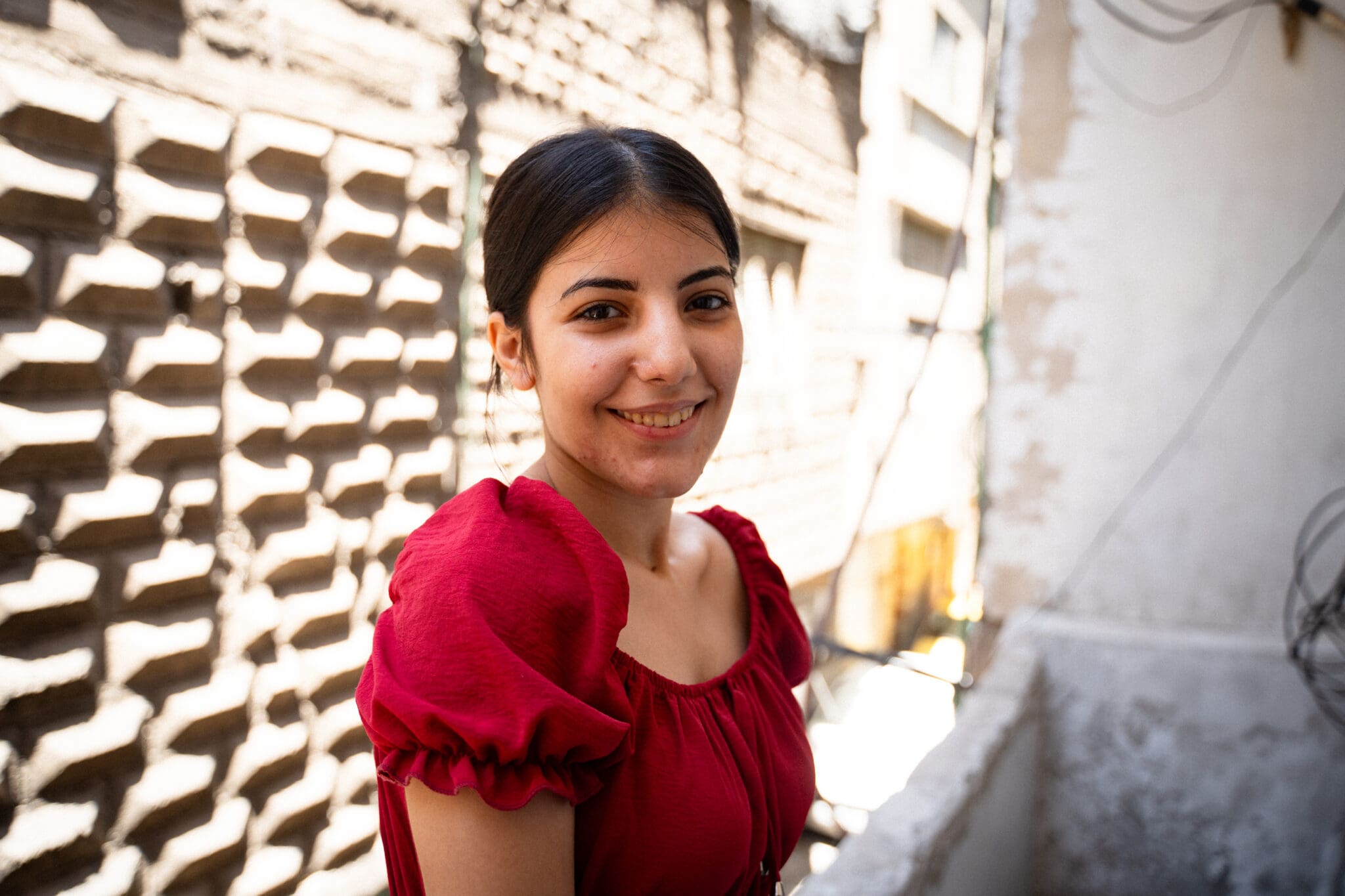
Angie, a 21-year-old student, survived only because she couldn’t find her usual seat near the front that evening.
“If I had stayed in my place, I would have been in pieces,” she told me. “Only when I heard the gunfire did I move—and that saved me. It was like divine intervention.”
The blast shattered her body. Shrapnel tore into her face; she lost her toe. For weeks she returned to the hospital every three days to see if her foot would survive. Yet the deepest wound was invisible.
“How did I survive? Why me? Why not the others?” she asked.
For months she refused to enter the church again. But eventually she returned, trembling, and saw the ruins with her own eyes.
“I realized there was a divine power that helped me stand up from my seat, walk out alive with my hands and legs—even if I lost a finger. There must be something next.”
Now engaged and freshly graduated, Angie dreams of building a life beyond Syria. Safety, she told me, is her only prayer.
The Price of a Father
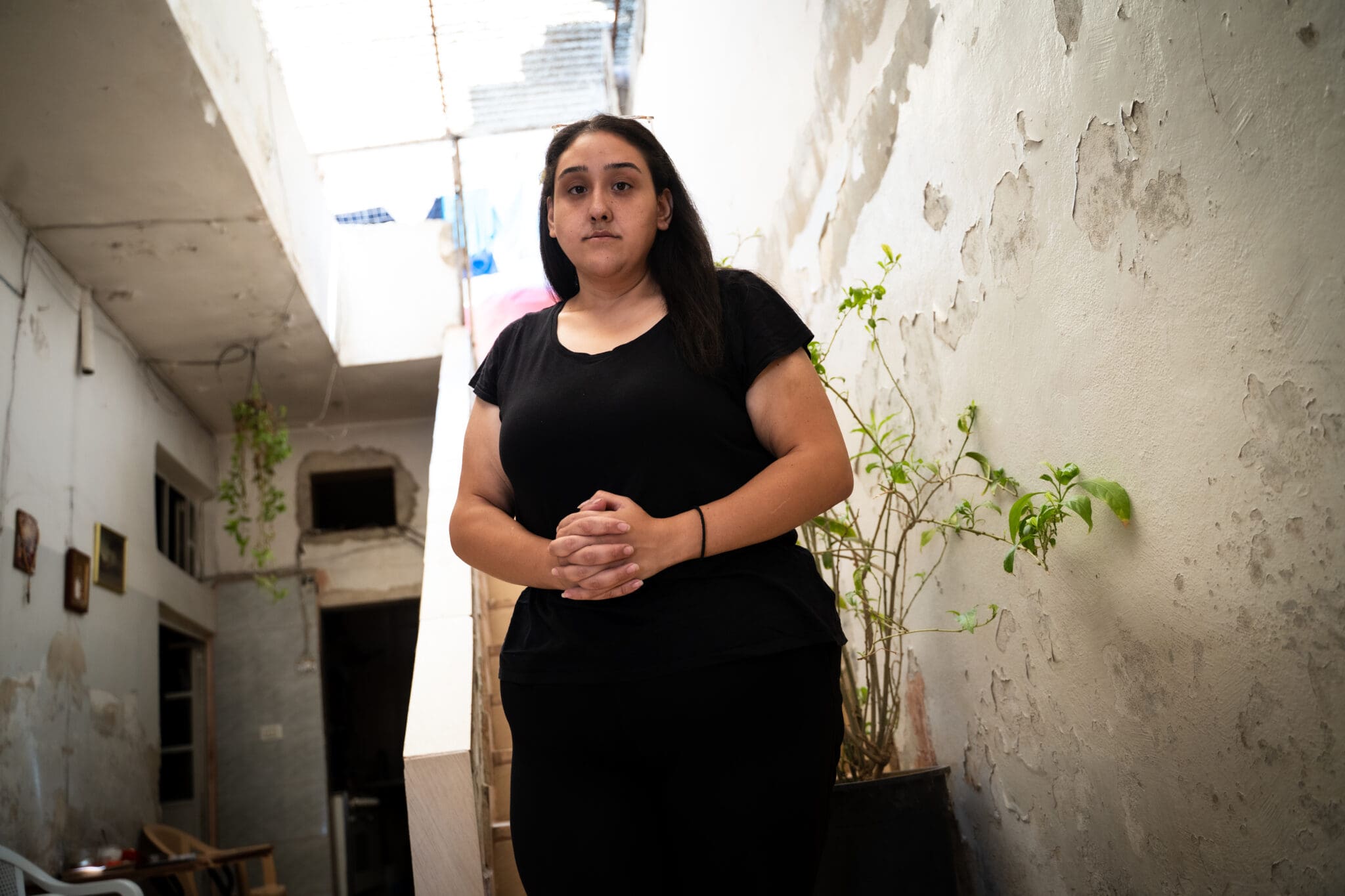
Jenny’s story was different. She lost her father in the bombing.
When the explosion hit, her family’s first instinct was denial. She kept calling his phone, hoping he was only lost in the chaos. Finally, a stranger answered: “I found the phone on the ground. I don’t know if its owner is alive or dead.”
Hours later, she learned the truth—not from hospital officials, but from a viral video circulating online. The image of her father’s broken body spread before she was told he had died.
“My father was young—only fifty-three,” she said. “We never imagined this would happen. We lost not just a father, but the one who supported our family, who made us feel secure.”
Her mother has not entered his room since. His absence is a silence that haunts every cup of tea, every family gathering.
Jenny confessed that at first she was angry with God. “But then we said, surely God has wisdom greater than our human minds. Always, especially in moments of death, there are moments of weakness when you question Him. But I trust God is good. Maybe He wanted more saints in heaven.”
A Daughter Gone
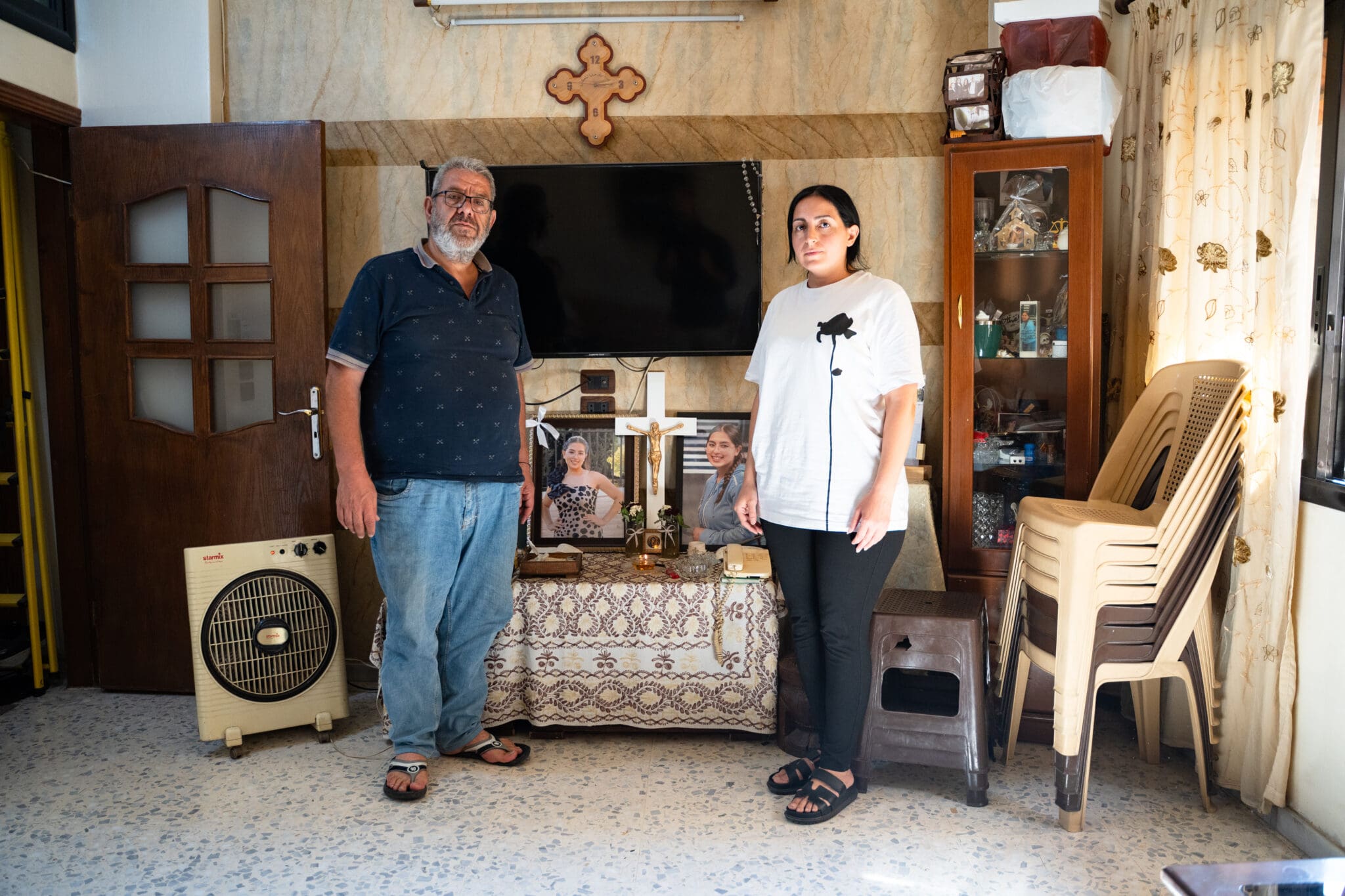
Rima and Okla lost their youngest daughter Angie—just fifteen. She had finished an exam and gone to Mar Elias to light a candle.
They identified her by the receipt in her pocket for a course fee, and the house key she carried.
“She was kind, innocent,” her father said. “Even if she put on a little makeup, she was afraid of me scolding her. If I was upset for a minute, she would do the impossible to make me feel better.”
Their loss left them hollow. Yet even in grief, Rima insisted on forgiving: “We pray for [those who attack us]. Our God is not a killer. We don’t want harm for anyone. We pray they come to their senses.”
Their daughter is gone, but they now call her their angel, their saint.
Blood and Forgiveness
What struck me most in these conversations was the refusal to answer violence with vengeance. Survivors spoke of hearing a voice during the attack: Do not be afraid. I am with you.
Even in mourning, survivors return to the church. Services have resumed—two a week, soon three. Catechism and Sunday schools are back. Scouts gather. The church hall downstairs is cramped, but filled to overflowing.
“They are not going to scare us, and they’re not going to make us leave,” Father Boutrous preached at the first mass after the bombing. “We want to stay and stand our ground even more than before. Because that is our faith.”
A Fading Presence
The massacre at Mar Elias is not an isolated tragedy. It is part of a wider erosion of Christianity in Syria.
Before the war began in 2011, there were an estimated 2.2 million Christians. Today fewer than 500,000 remain—a decline of nearly 80 percent. Entire communities from Aleppo, Homs, and Raqqa have vanished.
The violence follows a grim pattern: Iraq’s Christians dwindled after waves of targeted attacks in the 2000s. Many fear Syria is on the same path.
For those who remain, daily life is survival: shortages of bread, displacement, an economy in collapse. “We’re living just for today,” one survivor told me. “We don’t know about tomorrow. We’re living in the unknown.”
Standing in the Gap
This is where Global Christian Relief has chosen to stand. I traveled here not to deliver answers, but to listen—and to show Syrians they are not alone. Through partnerships with local churches, relief projects, and support networks, GCR helps believers stay rooted in their homeland.
“The prayers of Christians around the world are what strengthen us,” Father Boutrous told me. “It means so very much when we know that a brother in Christ at the other end of the earth is remembering us. That is what comforts and strengthens us.”
One widow told me bluntly: “If we didn’t know Christians outside were supporting us, we would be devastated and destroyed.”
Future Hope
On my last day, I stood at the site of the blast. Construction workers hammered in the background. The green tarpaulin fluttered where a wall had been. On the plywood covering the crater, the candle still burned.
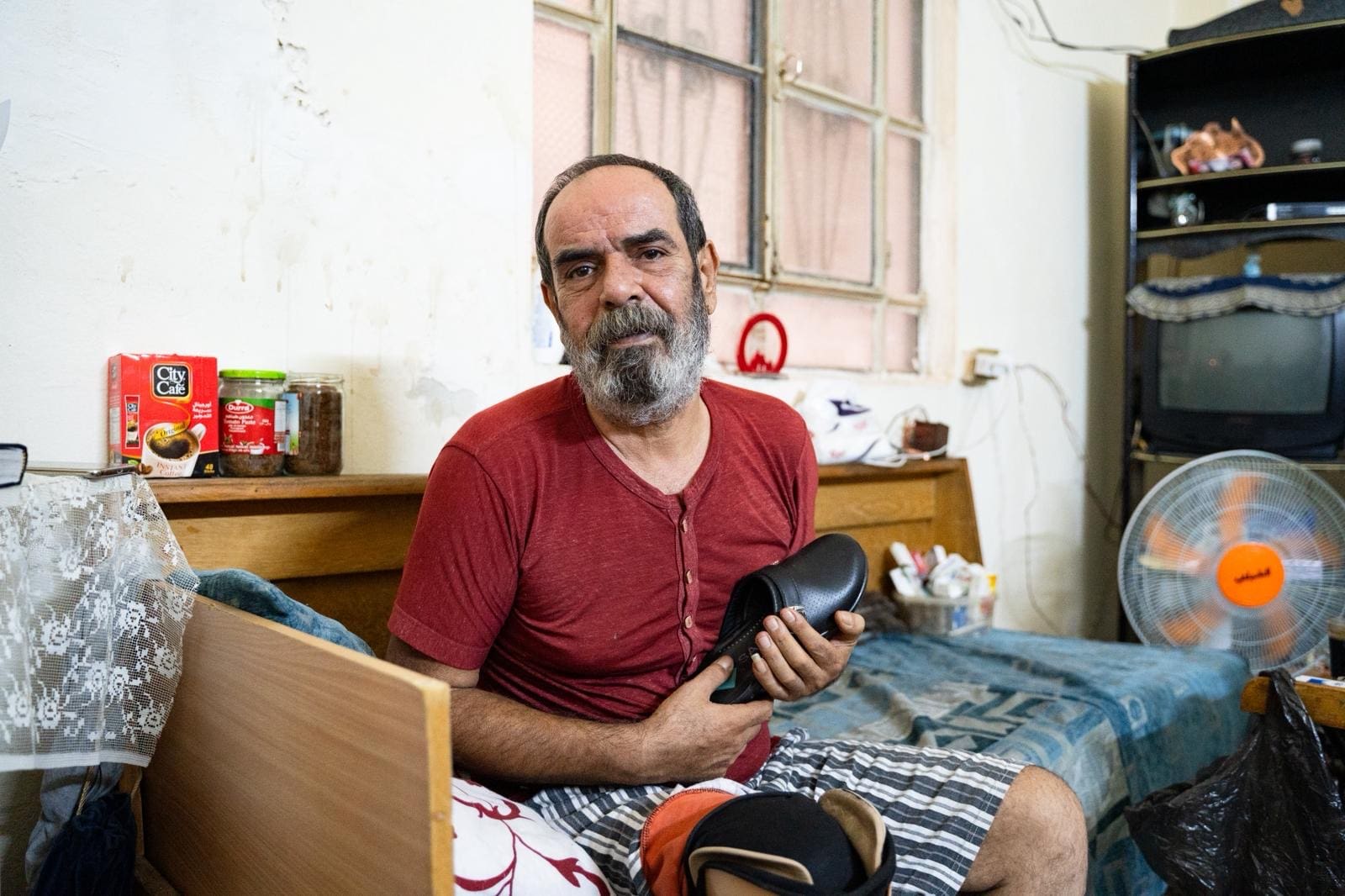
I thought of Sarah, the twelve-year-old who lost her hearing. Of Musa, who keeps his wife’s shoe by his bed. Of Angie, who wonders why she lived. Of Rima and Okla, who pray for their daughter’s killers. Of Father Boutrous, who smelled blood like perfume.
Back in my hotel room in Damascus, their voices stayed with me. I cried. I prayed. I turned over every story until it left me restless and raw. I tried to imagine their tomorrows, their fears, and their courage. And then I forced myself to think beyond the rubble—to the day when Christ will return, when every knee will bow, when death and terror will be no more.
Until then, my heart aches for Syria’s Christians. For their protection. For their justice. For their endurance. And one conviction remains: we cannot let them stand alone.
The Candle
The future of the church in Syria is uncertain. Once 10 percent of the nation, Christians are now less than three. Extremism, suspicion, and poverty press in. Yet amid ruins, they keep lighting candles.
Before I left, Father Boutrous looked at me with eyes heavy but resolute.
“We are still here,” he said. “And as long as there is even one candle, the church will live.”
For Our Persecuted Family Let Them Know They Are Not Forgotten
Like the believers at Mar Elias, Christians in the world’s most dangerous places face violence and persecution. Your gift today provides urgent relief and reminds them that their global family is standing with them.
