Help Free Christian Families in Pakistan | Global Christian Relief

Pakistan

Free Christian families from slavery today!

Our supporters have already freed over 250 families from bonded labor in Pakistan. When you give today, 100% of your gift goes toward helping impoverished families trapped in Pakistan’s brick kilns.

Watch story video thumbnail Video Play Button

A $1,018 loan can trap believers in a lifetime of slavery.

The path to freedom

Help us continue freeing families from modern-day slavery: Meet their needs—and provide a path to freedom!

checkbox icon

Your $1018 gift frees one family from the nightmare of bonded labor.

checkbox icon

Your $623 gift supplies financial training & small business stipends to help them escape debt for good.

checkbox icon

Your $100 gift provides up to 70 mobile medical visits for brick kiln workers.

checkbox icon

Your $60 gift supplies food relief kits, so families don’t need predatory loans to survive.

*100% of your gift goes toward serving families in Pakistan's brick kilns
20,000Brick kilns in Pakistan
3.5MBonded laborers
$1,018Average debt

the harsh reality for Christians in Pakistan Your gift gives Christian families a new future

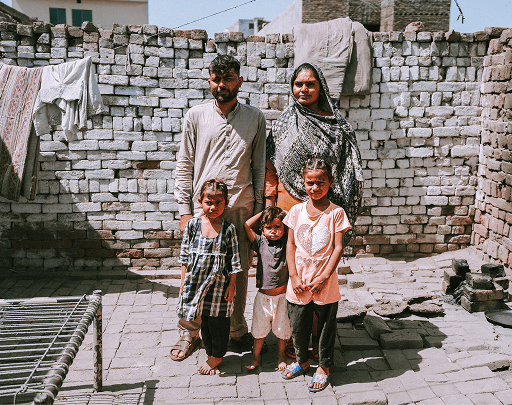
In Pakistan, Christians are in the minority, often discriminated against and deprived of living wages. They often turn to the brick kiln industry to get loans for needed food, medical procedures, or rent.

Thinking they can pay off a $800-$1000 loan quickly, entire families often get trapped into a lifetime of bonded labor from low garnished wages, steep interest, and snowballing debt they can’t earn their way out of.

We’re dedicated to freeing more Christian families–hardworking men, women, and children–who desperately need your help. As a donor-funded ministry, we can’t do it without you.
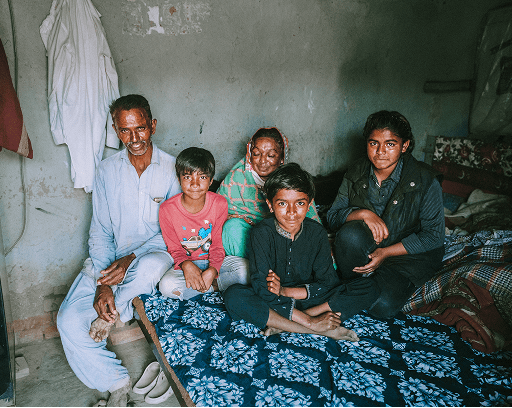
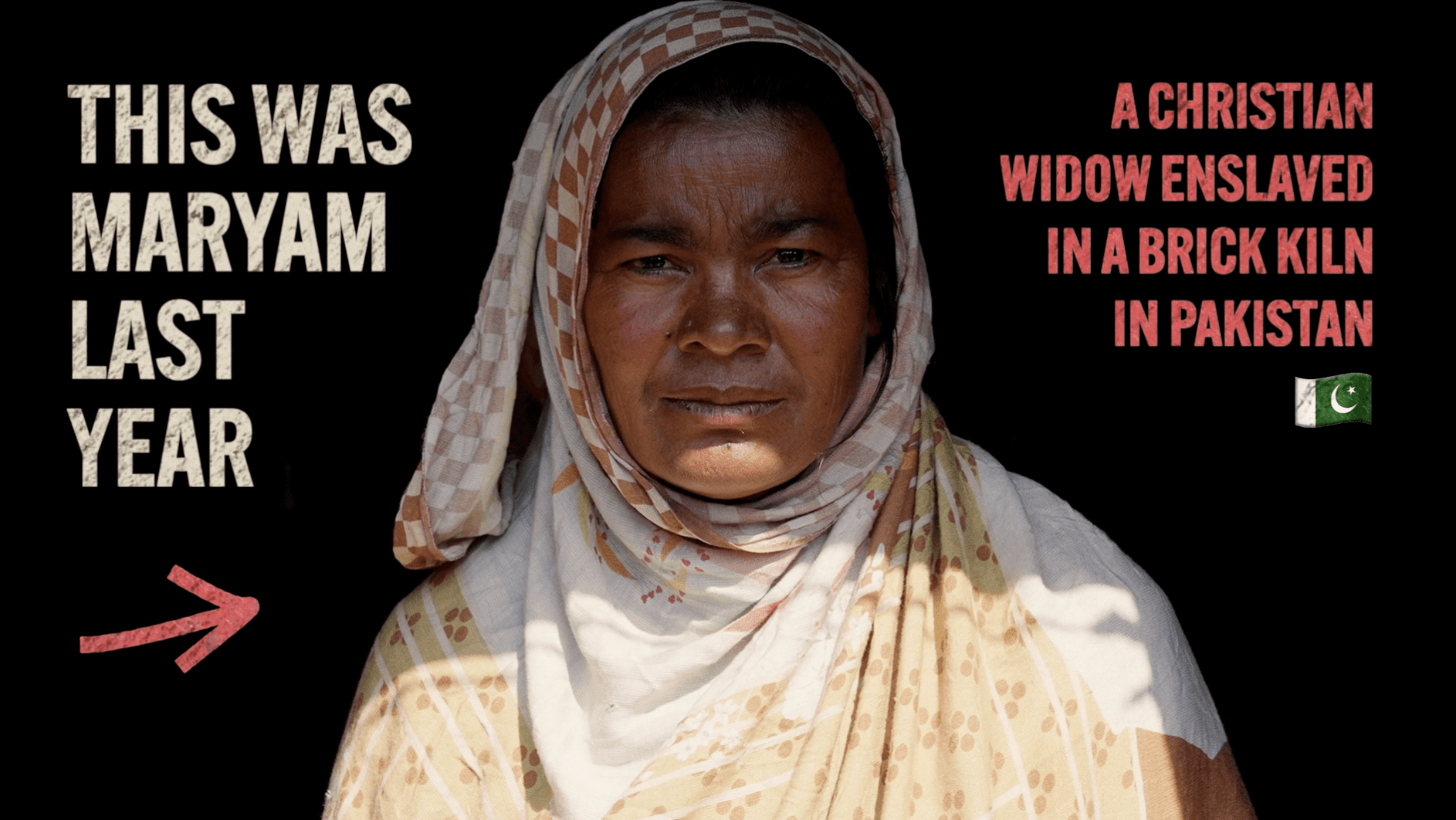
Maryam’s journey to freedom

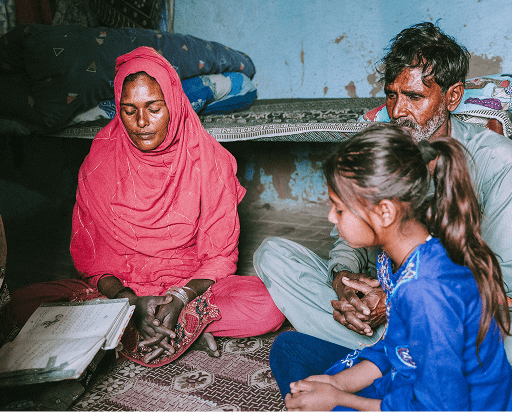
Maryam was trapped in the kilns with her husband for 20 years for a $862 loan. Working in hazardous conditions and unable to get medical care, her husband died of severe asthma.

Last year, we paid her debt in full and she lives out the dreams she had with her late husband to move into a new home.

“We prayed … that God would help us pay our loans so our children can be free. Now, He has given this to us. We are so blessed.”

The path to sustainable freedom

Once your generosity frees a family from debt, we use our proven three-step Blueprint for Freedom to ensure lasting financial independence.

1. Freedom and debt relief

1. Freedom and debt relief

Pay off predatory loans in full

2. Income-generating projects

2. Income-generating projects

Provide a way to make a sustainable income

3. Financial training & support

3. Financial training & support

Offer business and financial literacy training

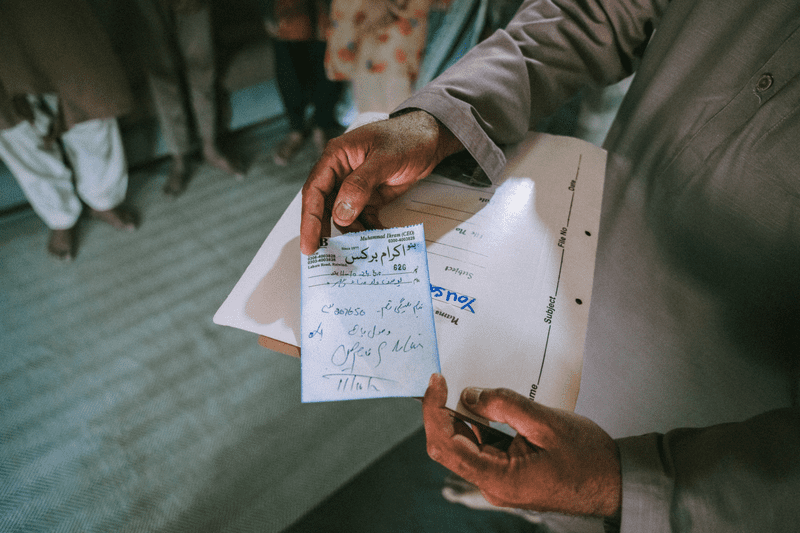
This check frees a family from 15 years of slavery

A simple piece of paper means  a complete life change. After 15 long years of relentless work, Khalid and his family are finally free, their debt cleared by our supporters. We had the special privilege of walking into the kiln owner’s office, handing over this check, and settling Khalid's debt in full.

Khalid's first prayer

Khalid's first prayer wasn't for his own family, but for others still trapped in the kilns.

“First, we will pray to the Lord that He will also help all those people who are under debt, so they can also be released.”


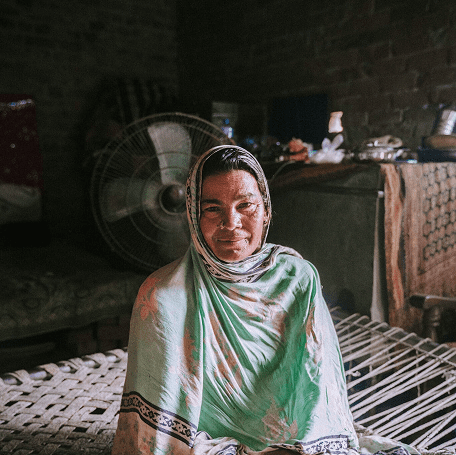
Azeeb’s newfound legacy

After 30 years of working in the brick kilns, Azeeb’s paychecks were nearly all garnished and his debt was going to pass to his children.

Since his debt was paid last year, Azeeb’s home now radiates hope and possibility where despair once lived. His son landed a well-paying government job, and he’s saving for his daughter’s wedding.

“This is one of the greatest achievements, and this is all because of you.”

We are Global Christian Relief

For over 50 years, we’ve been dedicated to responding to the needs of the global Church in the most challenging regions, providing hope where faith costs the most. In Pakistan, we’re breaking the chains of modern-day slavery by freeing Christian families trapped in brick kilns through predatory debt. We also work with local partners to provide medical care, emergency food relief, and income-generating opportunities—creating sustainable freedom.

trustworthy Our organization is trusted by

Interested in reading Frequently Asked Questions?

What is the average amount of debt?

The loan amounts vary but can be as little as a few hundred to a few thousand dollars. On average, the families we work with have a debt of $800 - $1,000 US.

Is bonded slavery legal in Pakistan?

Bonded labor was technically banned in 1992, but these kilns continue operating and thriving due to government oversight, corruption, and the influence of the kiln owners. In many ways, this type of slavery is part of the societal norms inside Pakistan.

Do those who get their debt paid off leave the kilns?

Most of the families we work with do not leave immediately. They would need additional income to afford a home or apartment outside of the kilns. However, when they are freed from bonded slavery, their wage increases, they are no longer under the authority of the owner and the income generation projects we provide help them plan by developing another trade and an extra income to one day leave the kilns. There are exceptions, and some families can leave quickly because of their circumstances, but most of the time leaving the kilns takes 1-2 years of planning and saving.

What do you do to help after you pay off their bonded debt?

While families are in bonded slavery, we help provide schools for their children, mobile medical clinics and vocational training and when we release a family from bonded slavery, we provide an income generating project they can use to build a business outside of the kilns. And we have just launched a 6-week financial training course for all the families we help free.

What do they get paid daily?

Pay fluctuates, but often they are paid between $3 - $5 a day and those wages are garnished for interest and their debt payment which often leaves them with as little as $1.50 a day.

How young do the kids start working?

It varies by family, but young teenagers are tasked with helping their family by working in the kilns and many times they start younger than that.

Does your org do financial training?

Yes! Our partners are launching a 6-week financial training course for the families we release.

How widespread is the issue of bonded slavery in Pakistan?

Although it is banned, the industry is unregulated. There are an estimated 20,000 brick kilns in Pakistan, most of whose workers are in bonded slavery.

Does this anger the brick kiln owners when someone leaves?

We approach the owners through our partners who are respected and have long-lasting relationships with the brick kilns. We are incredibly careful in each case to make sure the debt relief is seen as a business enhancement for the owners. This is a delicate process that is vetted carefully by our partners on the ground to ensure the safety of the families and to foster a positive relationship with the owners.

How do you set up meetings with the owners?

Our partners on the ground have forged relationships with owners from many kilns across Pakistan. They have trusted relationships with them and set up meetings to discuss debt relief well in advance.

Are other families jealous when another is freed?

We make every effort to do the debt relief without attracting attention from the entire kiln, but there is always potential for other Christian families to see what happens and to become jealous or frustrated that they are still in bondage. It speaks to the massive need to free Christian families across the 20,000 brick kilns.

What would it cost to buy a complete kiln and change the system?

We are currently brainstorming ideas around purchasing kilns and turning over the management to Pakistani Christian business leaders, but at this point we do not have any plans to purchase a brick kiln.

Are there churches in the kilns?

In a majority Muslim country, Christianity isn’t widely accepted. While some kiln owners allow believers to gather for church, many, like Asid and Rabia’s don’t allow them time off or the freedom to leave the premises. Churches often use buildings like sewing centers during non-operating hours.